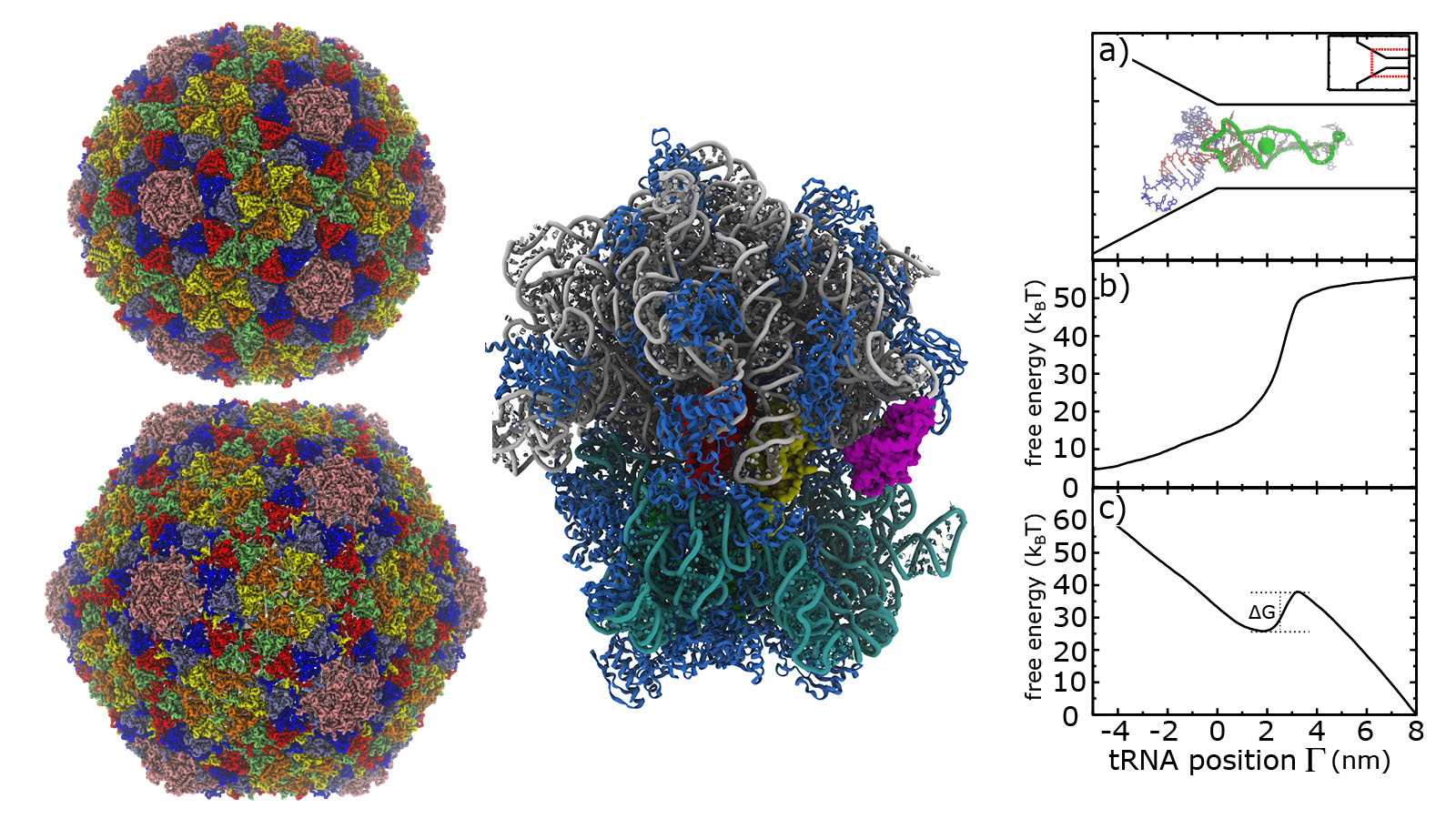
The Whitford Group is a theoretical biological physics research group focused on the energetic properties of biomolecular dynamics using theoretical modeling and high-performance computing (HPC). His work explores biomolecular transitions, energy transfer, protein and RNA folding, and large-scale conformational changes in molecular machines. Their current projects study the dynamics of large molecular assemblies like ribosomes, viral capsids, and the SARS-CoV-2 Spike protein.
The Group develops and applies various models to uncover the physical principles behind biomolecular dynamics and uses molecular simulations to interpret experimental data from techniques such as biochemical assays, small-angle X-ray scattering, and cryogenic electron microscopy. Their interdisciplinary approach involves collaboration with chemists, biologists, engineers, computational scientists, and medical researchers to bridge basic science and medical applications and frequently involves collaboration with experimentalists to compare theoretical models with cellular dynamics