Hurricanes generate enormous ocean waves that can threaten ships, offshore infrastructure, and coastal communities. Accurately predicting wave height and behavior is therefore essential for weather forecasting and hazard preparedness. Yet scientists have long known that hurricane-driven ocean currents interact with surface waves in complex ways that are difficult to capture in forecast models.
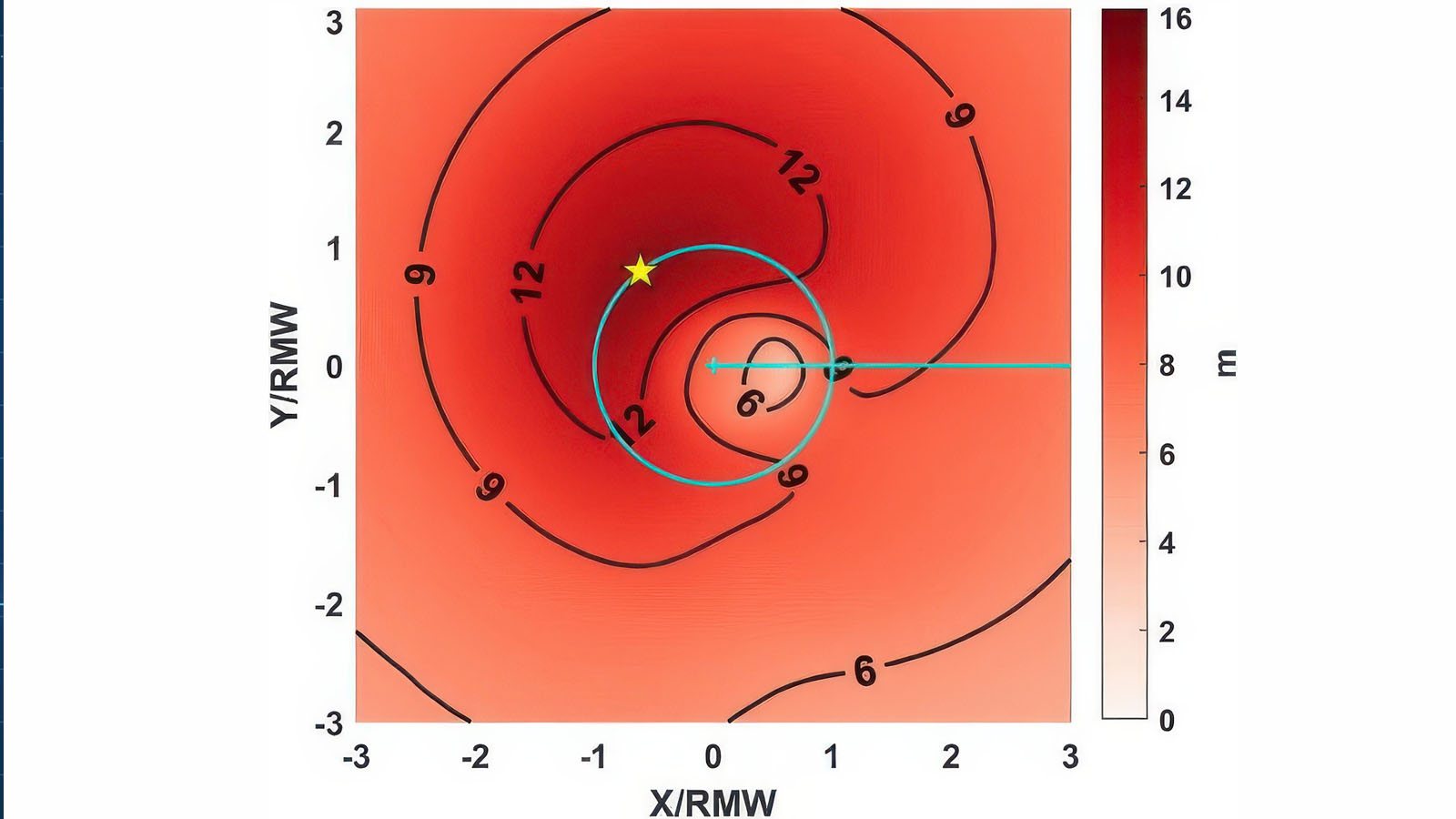
Researchers at the University of Rhode Island's Hurricane Research Lab used advanced computer simulations to investigate how strong ocean currents influence waves during hurricanes. Led by Isaac Ginis, the team discovered that hurricane-generated currents can significantly reduce both the height and the dominant period of surface waves. In some cases, the simulations showed reductions of up to 2.2 meters (about seven feet) in significant wave height. The researchers found that the strongest effects occur on the front-right side of a hurricane, where winds, waves, and currents move in the same direction. Because the currents accelerate the waves through the storm, the waves spend less time gaining energy from the wind and therefore do not grow as large.
The findings could improve operational hurricane forecasting and provide more accurate estimates of ocean conditions during storms. Using high-performance computing resources available through URI's partnership with the MGHPCC, the researchers were able to perform the sophisticated coupled ocean-wave simulations needed to reveal these effects. Their work may ultimately help weather agencies deliver better forecasts and support safer decisions during dangerous storms.
Papandreou, A., Hara, T., & Ginis, I. (2026), Computer simulations show strong ocean currents reduce size of surface waves, Journal of Physical Oceanography, doi: 10.1175/JPO-D-25-0137.1