A longstanding challenge in chemistry is that even the smallest change to a molecule can dramatically alter its behavior. For researchers developing medicines, materials, and agricultural products, making those changes is rarely simple. Often, a tiny adjustment requires synthesizing an entirely new molecule from the beginning, adding significant time, cost, and complexity to the discovery process.
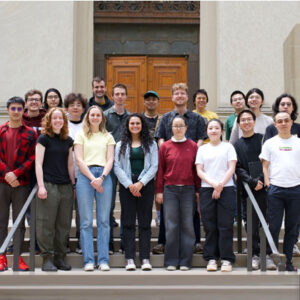
MIT chemists led by Professor Alison Wendlandt have developed a new molecular editing strategy that offers a more efficient path. Their technique allows an alcohol functional group, one of the most common features found in biologically active molecules, to be moved from one position to a neighboring site while preserving the molecule's overall structure. Using a light-activated catalyst called decatungstate, the researchers trigger a carefully controlled reaction that "relocates" the alcohol group without requiring the molecule to be rebuilt.
The advance gives scientists a powerful new way to fine-tune complex compounds at late stages of development. Instead of starting over each time they want to test a molecular variation, researchers can now make precise edits and rapidly explore new chemical possibilities. The approach could help accelerate the development of pharmaceuticals, advanced materials, and agrochemicals by making molecular optimization faster and more efficient.
MIT's research computing resources and analytical tools helped researchers investigate the reaction mechanism, evaluate selectivity, and understand the fundamental chemistry that makes these precise molecular edits possible.
Xu, Q., Nie, Y., Haaksma, J.-J., Zhang, R., Holmberg-Douglas, N., van der Mei, F., Scola, P. M., Williams, C., Johnson, J. A., and Wendlandt, A. E. (2026), Alcohol group migration by proximity-enhanced H atom abstraction, Nature, doi: 10.1038/s41586-026-10347-4