Menu

Studying Highly Efficient Biological Solar Energy Systems

Alison Sweeney uses research computing in her work at the intersection of physics and evolutionary biology, studying marine biophotonic materials.

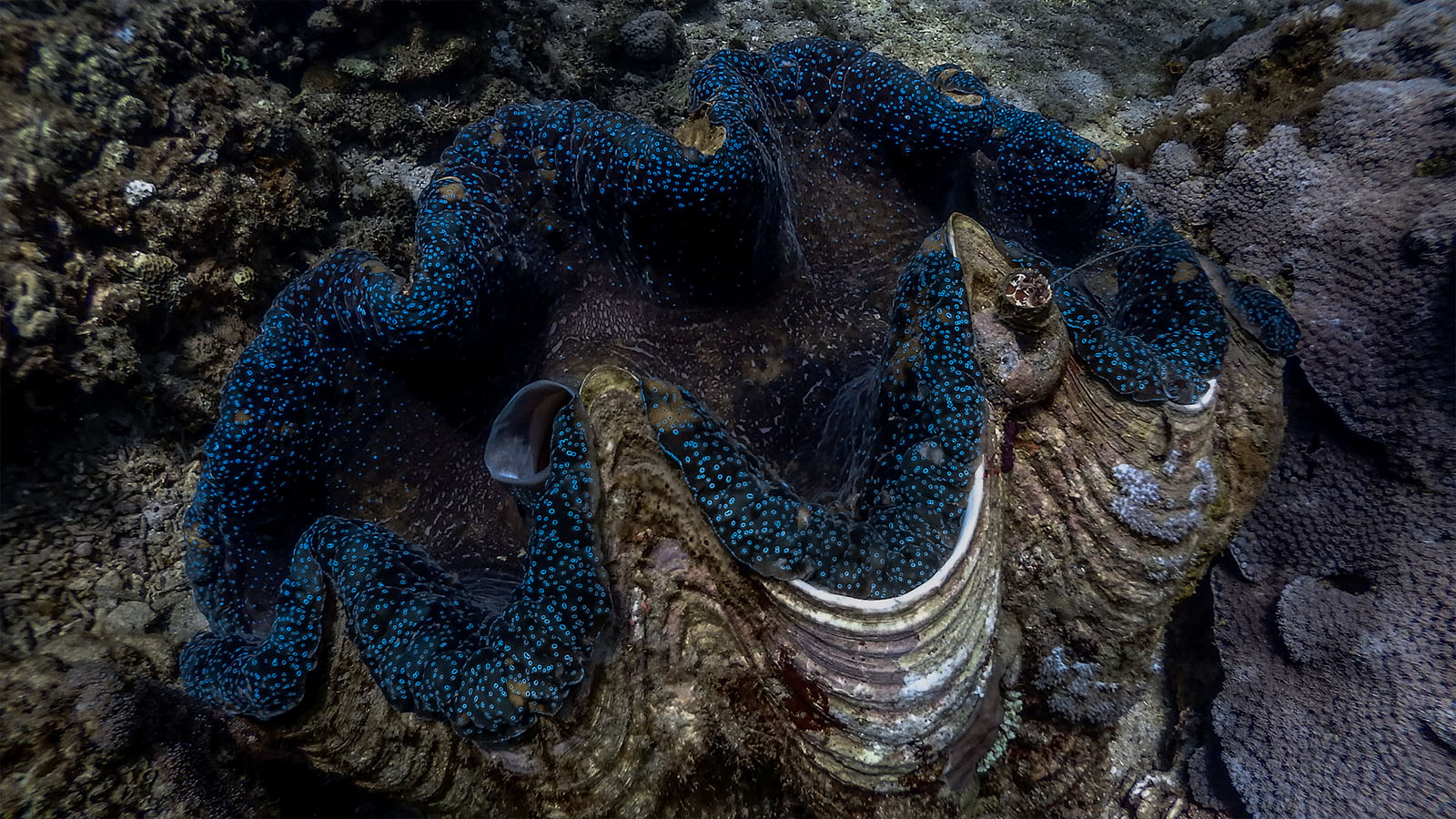
A new Yale-led study reveals that iridescent giant clams near tropical coral reefs may be the most efficient solar energy systems on Earth. These clams use a unique geometry with vertical algae columns and light-scattering cells to maximize sunlight absorption. Researchers developed a model based on clam geometry that showed a quantum efficiency of 67%, much higher than typical plant systems. The study suggests that understanding biological mechanisms like those in giant clams could inspire more efficient solar panel designs and sustainable energy technologies.

Alison Sweeney
Associate Professor of Ecology and Evolutionary Biology and of Physics

Research projects

Social Capital and Economic Mobility
Computing Hidden Health Threats from Heat
FlowER: AI for Predicting Chemical Reactions
Accelerating Rendering Power
Shining a Light on Dark Matter
Studying Highly Efficient Biological Solar Energy Systems
Sailing the Symbiosis Seascape
Surface Behavior
All Research Projects

Collaborative projects

ALL Collaborative PROJECTS

OUTREACH & EDUCATION PROJECTS

See ALL Scholarships
100 Bigelow Street, Holyoke, MA 01040