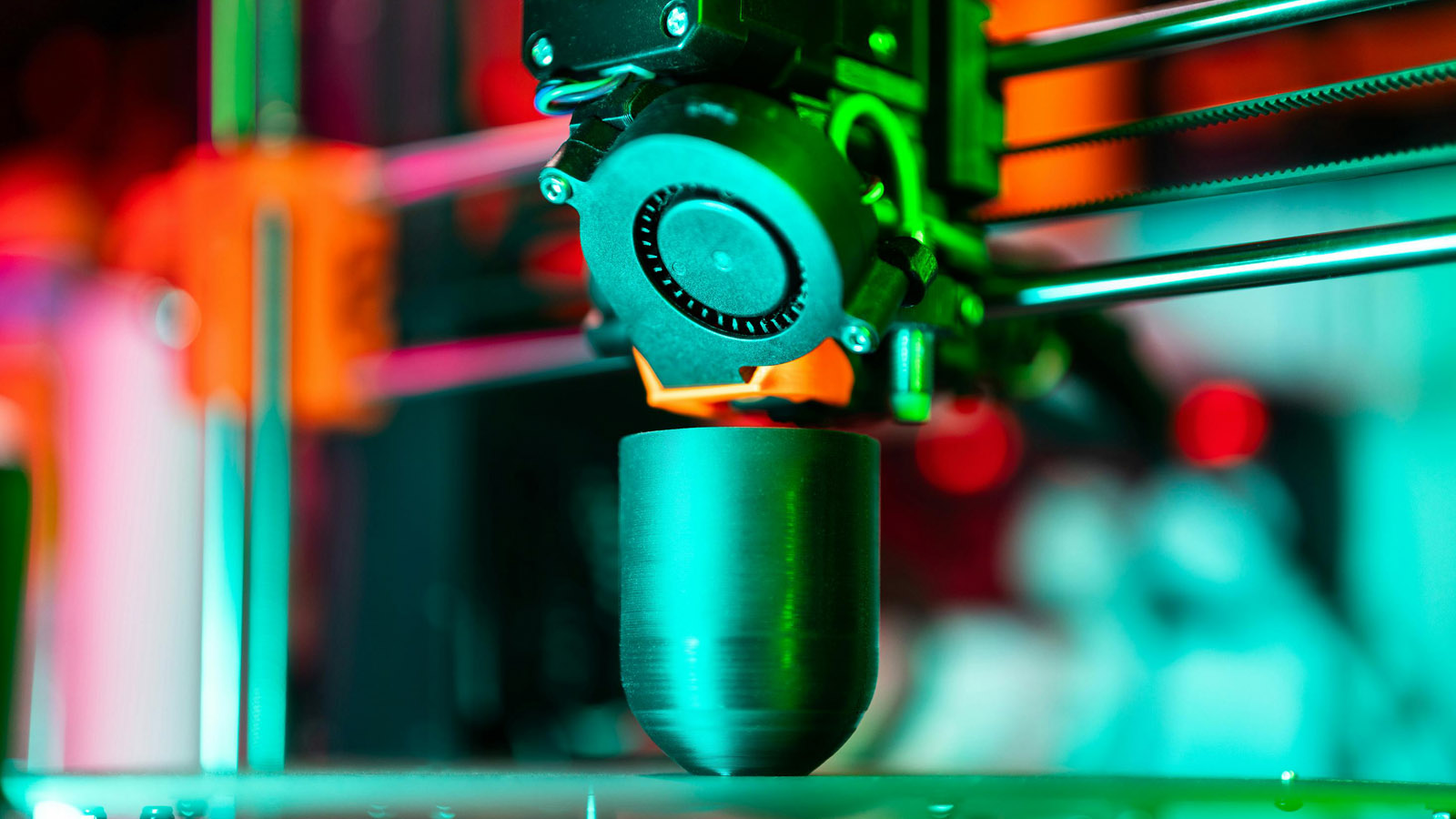
In a recent collaboration with researchers at Princeton, and national labs, the Lewis Lab in Harvard's John A. Paulson School of Engineering and Applied Sciences has developed a novel framework for 3D printing liquid crystal elastomers (LCEs)—soft, shape-shifting materials ideal for applications in soft robotics, prosthetics, and adaptive textiles. By controlling printing parameters like nozzle geometry and temperature, they achieved precise molecular alignment, enabling materials to respond predictably to heat.
To support this work, the team used Harvard’s Cannon computing cluster to run flow simulations and molecular modeling, helping define key parameters such as the Weissenberg number that guide material behavior. These simulations were critical in designing hyperbolic-shaped nozzles that produce uniform alignment, a breakthrough confirmed through real-time X-ray microbeam characterization.