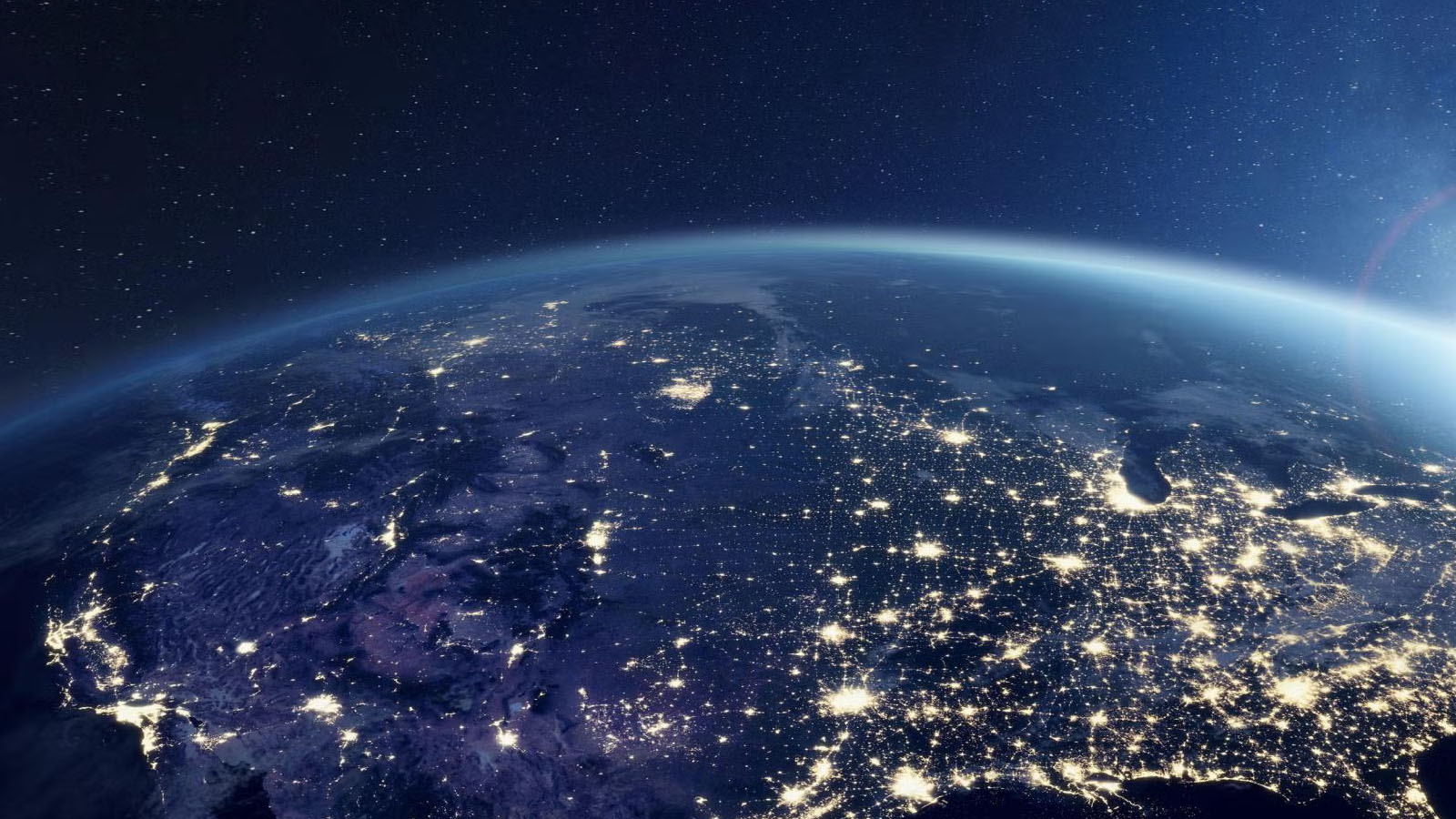
For decades, scientists have looked at Earth’s nighttime glow from space as a simple indicator of development: more light meant more economic activity, more infrastructure, and more people connected to electricity. But new research led by Yale’s Karen Seto shows that the story is far more dynamic. Using daily satellite imagery, the team found that Earth’s nighttime lights are not just getting brighter—they’re becoming more volatile, flickering in ways that reflect real‑time human behavior, conflict, policy changes, and economic shifts.
This volatility matters. Sudden drops in light can signal disasters, war, or infrastructure failures. Surges can reveal rapid urban expansion, industrial booms, or shifts in energy use. Understanding these patterns helps governments, researchers, and humanitarian organizations respond more quickly to emerging conditions on the ground.
To uncover these insights, the Seto Lab relies on supercomputing which make it possible to analyze enormous global datasets spanning years of satellite observations. These computational tools allow researchers to detect subtle changes, compare regions, and model how artificial light reflects the pulse of human activity. The result is a new way of reading the planet at night—one that reveals not just where people live, but how societies are changing day by day.