Welcome to the MGHPCC Virtual Booth

Boston University

Building for Floods

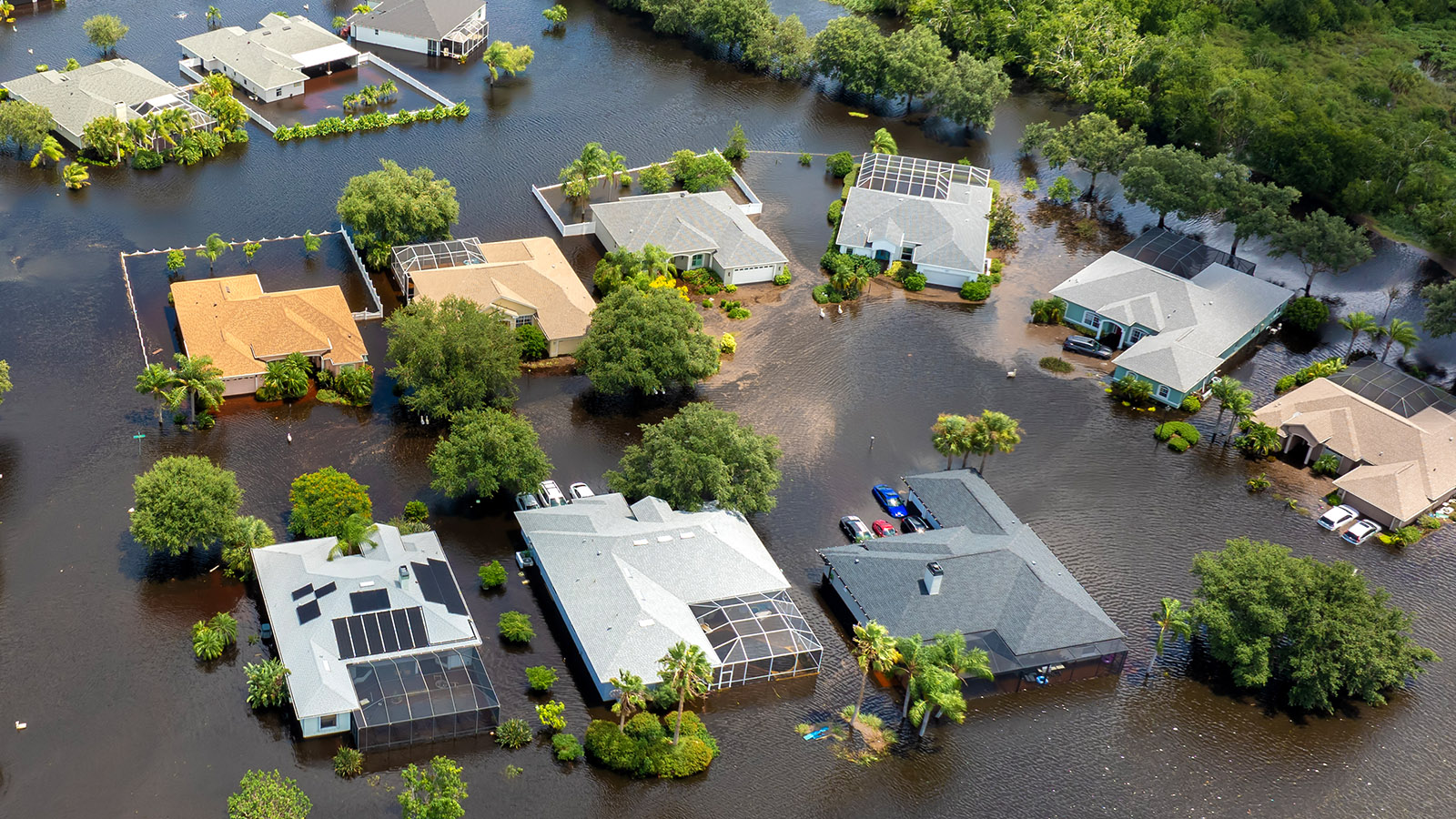
Abigail Ostriker, an economist at Boston University, utilizes BU’s computing resources housed at the MGHPCC to support her data-intensive, policy-relevant work.

Abigail Ostriker's research bridges environmental economics and public policy, focusing on how individuals and institutions respond to environmental risks.

In The Effects of Floodplain Regulation on Housing Markets, Ostriker and co-author Anna Russo examine how land-use regulations in flood-prone areas influence both the location and design of new housing. Using detailed data on housing markets and floodplain boundaries, they assess whether these regulations effectively reduce flood damage by encouraging safer construction or deterring development in high-risk zones. Their analysis balances the protective benefits of regulation against potential costs, such as reduced housing supply or increased prices.

From a research computing standpoint, the study showcases the integration of geospatial data, housing market records, and policy overlays—requiring sophisticated data processing and econometric modeling. The authors say they appreciated using the MGHPCC for analysis of large, granular, spatial data, including 30x30m land use data and digitized flood maps. “It has been particularly useful for allowing us to overlay these datasets with each other and calculate distances between grid cells and flood zone boundaries, which is the centerpiece of our main empirical analysis. Indeed, our main analysis dataset has 41 million observations in it, which would have been prohibitive to analyze without the MGHPCC's resources,” says Ostriker.

In a related paper that also used MGHPCC servers to analyze flood maps, the pair find that the boundaries of designated flood zones have become more irregular over time. Both existing and new development predict more irregularity, suggesting that petitions from homeowners led to regulatory exemptions. However, more irregularity is not associated with higher flood adaptation, indicating that these carve-outs do not reflect reduced risk.
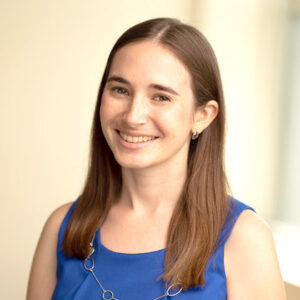
Abigail Ostriker
Assistant Professor in the Markets, Public Policy, and Law Department at Boston University’s Questrom School of Business.

Principal Members

Yale

Featured Projects

SC25 Project
A Safer Way to See Inside Cells
Adaptive Deep Learning Systems Towards Edge Intelligence
SC25 Project
AI for Cancer Diagnosis
SC25 Project
AI Pareidolia
SC25 Project
AI That Speaks Human About Health
SC25 Project
Better Pathogen Targeting
Research Computing Center
BU Research Computing Services
SC25 Project
Building for Floods
Campus Research Computing Consortium
Computation + Machine Intelligence | Wu Tsai Institute
Computational Modeling of Biological Systems
SC25 Project
Computing Hidden Health Threats from Heat
Deciphering Alzheimer's Disease
Developing Advanced Materials for a Sustainable Energy Future
Energy Science Network
MGHPCC Project
Expanding Computing Education Pathways (ECEP) Alliance
FABRIC Testbed
SC25 Project
FlowER: AI for Predicting Chemical Reactions
SC25 Project
Grid Responsive Data Centers
Research Computing Center
Harvard FASRC
IceCube: Hunting Neutrinos
IEEE High Performance Extreme Computing Conference
Impact of Marine Heatwaves on Coral Diversity
Internet2
Research Computing Center
Lincoln Laboratory Supercomputing Center (LLSC)
Massachusetts AI Hub
SC25 Project MGHPCC Project
MGHPCC AI Computing Resource (AICR)
MGHPCC Supercloud
SC25 Project
Microplastic-Free by Design
Research Computing Center
MIT Office of Research Computing and Data
SC25 Project
Multifunctional 3D-Printed Materials
SC25 Project
Naval and Ocean Renewable Energy Hydrodynamics
Research Computing Center
NEU Research Computing
Northeast Research and Education Network
MGHPCC Project
Northeast Storage Exchange
Northern Crossroads
Open Cloud Testbed
SC25 Project MGHPCC Project
OSN - Open Storage Network
Revolutionizing Materials Design with Computational Modeling
SC25 Project
Sailing the Symbiosis Seascape
SC25 Project
Shining a Light on Dark Matter
Simulating Large Biomolecular Assemblies
Software for Unreliable Quantum Computers
SC25 Project
Staving off the Banana Apocalypse
SC25 Project
Supporting Data-intensive Social Science
The Kempner Institute - Unlocking Intelligence
The US ATLAS Northeast Tier 2 Center
SC25 Project
Tracking Environmental Health Risks
Research Computing Center
UMass - URI Unity Cluster
Research Computing Center
UMass Amherst Research Computing and Data
Unity HPC and AI Platform
Research Computing Center
URI Institute for AI & Computational Research
SC25 Project
Wrangle Range Modeling
Yale Budget Lab
Research Computing Center
Yale Center for Research Computing
100 Bigelow Street, Holyoke, MA 01040