Welcome to the MGHPCC Virtual Booth

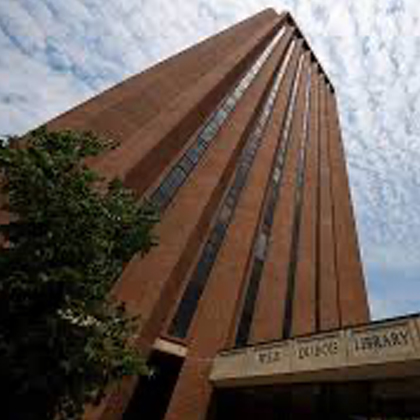
MIT

Computer Science and Artificial Inteligence Lab (CSAIL)

AI Pareidolia

Image credit: MIT
A recent MIT study explores how artificial intelligence perceives pareidolia—the human tendency to see faces in inanimate objects.

The researchers created the “Faces in Things” dataset, a human-labeled collection of over 5,000 images where people commonly perceive illusory faces. They trained face-detection algorithms on this dataset and found that AI systems initially struggled to recognize these faces. However, performance improved significantly when the models were first trained to detect animal faces, suggesting a possible evolutionary link between recognizing animal features and pareidolic perception.

The team also identified a “Goldilocks Zone of Pareidolia”—a specific range of visual complexity where both humans and machines are most likely to detect faces. This work not only deepens our understanding of human and machine vision but also opens new avenues for improving AI perception by mimicking evolutionary pathways in visual recognition

The MIT SuperCloud and Lincoln Laboratory Supercomputing Center provided HPC resources for the researchers’ results.
 

Mark Hamilton is a Senior Engineering Manager at Microsoft where he leads the SynapseML product. Concurrently, he has worked to earn PhD in computer science from William T Freeman's lab at the Computer Science and Artificial Inteligence Lab (CSAIL) at MIT.

Principal Members

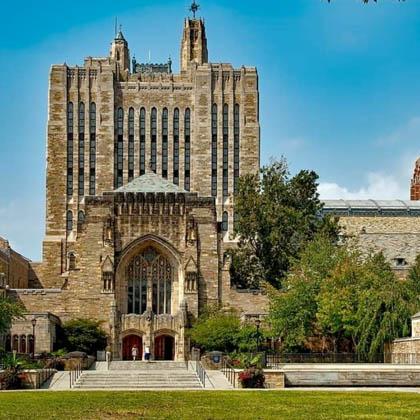
Yale

Featured Projects

SC25 Project
A Safer Way to See Inside Cells
Adaptive Deep Learning Systems Towards Edge Intelligence
SC25 Project
AI for Cancer Diagnosis
SC25 Project
AI Pareidolia
SC25 Project
AI That Speaks Human About Health
SC25 Project
Better Pathogen Targeting
Research Computing Center
BU Research Computing Services
SC25 Project
Building for Floods
Campus Research Computing Consortium
Computation + Machine Intelligence | Wu Tsai Institute
Computational Modeling of Biological Systems
SC25 Project
Computing Hidden Health Threats from Heat
Deciphering Alzheimer's Disease
Developing Advanced Materials for a Sustainable Energy Future
Energy Science Network
MGHPCC Project
Expanding Computing Education Pathways (ECEP) Alliance
FABRIC Testbed
SC25 Project
FlowER: AI for Predicting Chemical Reactions
SC25 Project
Grid Responsive Data Centers
Research Computing Center
Harvard FASRC
IceCube: Hunting Neutrinos
IEEE High Performance Extreme Computing Conference
Impact of Marine Heatwaves on Coral Diversity
Internet2
Research Computing Center
Lincoln Laboratory Supercomputing Center (LLSC)
Massachusetts AI Hub
SC25 Project MGHPCC Project
MGHPCC AI Computing Resource (AICR)
MGHPCC Supercloud
SC25 Project
Microplastic-Free by Design
Research Computing Center
MIT Office of Research Computing and Data
SC25 Project
Multifunctional 3D-Printed Materials
SC25 Project
Naval and Ocean Renewable Energy Hydrodynamics
Research Computing Center
NEU Research Computing
Northeast Research and Education Network
MGHPCC Project
Northeast Storage Exchange
Northern Crossroads
Open Cloud Testbed
SC25 Project MGHPCC Project
OSN - Open Storage Network
Revolutionizing Materials Design with Computational Modeling
SC25 Project
Sailing the Symbiosis Seascape
SC25 Project
Shining a Light on Dark Matter
Simulating Large Biomolecular Assemblies
Software for Unreliable Quantum Computers
SC25 Project
Staving off the Banana Apocalypse
SC25 Project
Supporting Data-intensive Social Science
The Kempner Institute - Unlocking Intelligence
The US ATLAS Northeast Tier 2 Center
SC25 Project
Tracking Environmental Health Risks
Research Computing Center
UMass - URI Unity Cluster
Research Computing Center
UMass Amherst Research Computing and Data
Unity HPC and AI Platform
Research Computing Center
URI Institute for AI & Computational Research
SC25 Project
Wrangle Range Modeling
Yale Budget Lab
Research Computing Center
Yale Center for Research Computing
100 Bigelow Street, Holyoke, MA 01040