Welcome to the MGHPCC Virtual Booth

MIT

Modeling an Atmospheric Detergent

Image: MIT News; iStock
Research computing helped model how climate change could affect Earth's methane-cleaning chemistry.

Methane is one of the most powerful greenhouse gases driving climate change, second only to carbon dioxide. Fortunately, Earth's atmosphere has its own cleaning system: highly reactive molecules called hydroxyl radicals (OH), often known as the atmosphere's "detergent." These molecules help break down methane and other pollutants before they accumulate. But as global temperatures rise, scientists have struggled to predict whether this natural cleansing process will become stronger or weaker.

To answer that question, members of atmospheric chemist Arlene Fiore's lab developed a new climate modeling framework to predict how hydroxyl radicals may respond to a warming world and affect methane removal. Advanced atmospheric modeling and computational analysis enabled the team to untangle competing climate processes that influence the planet's natural cleansing capacity.

The team's results suggest that under a 2°C global temperature increase, water vapor could raise hydroxyl radical levels by about 9 percent, while increased plant emissions could offset much of that gain, reducing levels by roughly 6 percent. The net effect is a modest increase in the atmosphere's ability to remove methane.

This work improves scientists' understanding of how Earth's self-cleaning atmosphere may function in the future, helping inform climate projections, air-quality forecasts, and strategies for managing greenhouse gas emissions. 

Publication

Zhu, Q., Neumann, N., Fiore, A. M. et al (2026), Uncertain Natural Emissions Dampen the Increase in Tropospheric Hydroxyl Radical (OH) With Idealized Surface Warming, Journal of Advances in Modeling Earth Systems, doi: 10.1029/2025MS005248

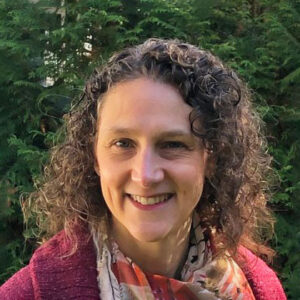
Arlene M. Fiore
Arlene Fiore and her group use research computing to advance our understanding of how anthropogenic and natural pollutant emissions influence atmospheric chemistry, climate, and air pollution.

Principal Members

Yale

Featured Projects

A Cooler Quantum Future
SC25 Project
A Safer Way to See Inside Cells
Accelerating Materials Innovation with DFT, CALPHAD, and AI
Adaptive Deep Learning Systems Towards Edge Intelligence
SC25 Project
AI for Cancer Diagnosis
SC25 Project
AI Pareidolia
AI-powered Performance Analytics for HPC Systems
Asking Planetary Whatifs
SC25 Project
Better Pathogen Targeting
Research Computing Center
BU Research Computing Services
Building Bicontinuous Materials
SC25 Project
Building for Floods
Computation + Machine Intelligence | Wu Tsai Institute
SC25 Project
Computing Hidden Health Threats from Heat
Computing Ocean Carbon Removal
Computing the Geometry of Frustration
Dartmouth Chat
Developing Advanced Materials for a Sustainable Energy Future
From Murmurations to Music: Turning bird flight into climate stories
Generations of Discovery
Research Computing Center
Harvard FASRC
IceCube: Hunting Neutrinos
Imaging at Light Speed
Impact of Marine Heatwaves on Coral Diversity
Inside the Ocean's Response to Hurricanes
Learning Beyond Attention
Research Computing Center
Lincoln Laboratory Supercomputing Center (LLSC)
Mapping the Universe with AI and Supercomputing
Materials Remember
Materials That Give
SC25 Project MGHPCC Project
MGHPCC AI Computing Resource (AICR)
MGHPCC and Internet2
MGHPCC and Northern Crossroads
MGHPCC and the Campus Research Computing Consortium
MGHPCC and the IEEE High Performance Computing Conference
MGHPCC and the Massachusetts AI Hub
MGHPCC Project
MGHPCC and the National Data Platform
MGHPCC and the Northeast Research and Education Network
SC25 Project MGHPCC Project
MGHPCC and the Open Storage Network
MGHPCC Project
MGHPCC and the Prototype National Research Platform (PNRP)
MGHPCC Supercloud
SC25 Project
Microplastic-Free by Design
Research Computing Center
MIT Office of Research Computing and Data
Modeling an Atmospheric Detergent
SC25 Project
Multifunctional 3D-Printed Materials
SC25 Project
Naval and Ocean Renewable Energy Hydrodynamics
Research Computing Center
NEU Research Computing
SC25 Project
New Insights on Binary Black Holes
Northeast Storage Exchange
Precision Molecular Editing
Reading Night Light
SC25 Project
ReMIND
Revolutionizing Materials Design with Computational Modeling
Rhode Island INBRE Molecular Informatics Core (MIC)
SC25 Project
Sailing the Symbiosis Seascape
Seeing Ocean Currents with AI
SC25 Project
Shining a Light on Dark Matter
Simulating Large Biomolecular Assemblies
Smarter Protein Engineering
Software for Unreliable Quantum Computers
Solving a Physics Mystery with Supercomputing
SC25 Project
Staving off the Banana Apocalypse
Supercomputing the Arctic
SC25 Project
Supporting Data-intensive Social Science
The Kempner Institute - Unlocking Intelligence
The US ATLAS Northeast Tier 2 Center
Towards a Self-driving Lab?
Tracking Earth's Atmospheric Highways
Research Computing Center
UMass - URI Unity Cluster
Research Computing Center
UMass Amherst Research Computing and Data
Unlocking Non-coding DNA
Research Computing Center
URI Institute for AI & Computational Research
Virtual Materials Discovery at Scale
Watering MIT's AI Garden
SC25 Project
Wrangle Range Modeling
Yale Budget Lab
Yale Center for Genome Analysis (YCGA)
Research Computing Center
Yale Center for Research Computing
100 Bigelow Street, Holyoke, MA 01040