Welcome to the MGHPCC Virtual Booth

MIT

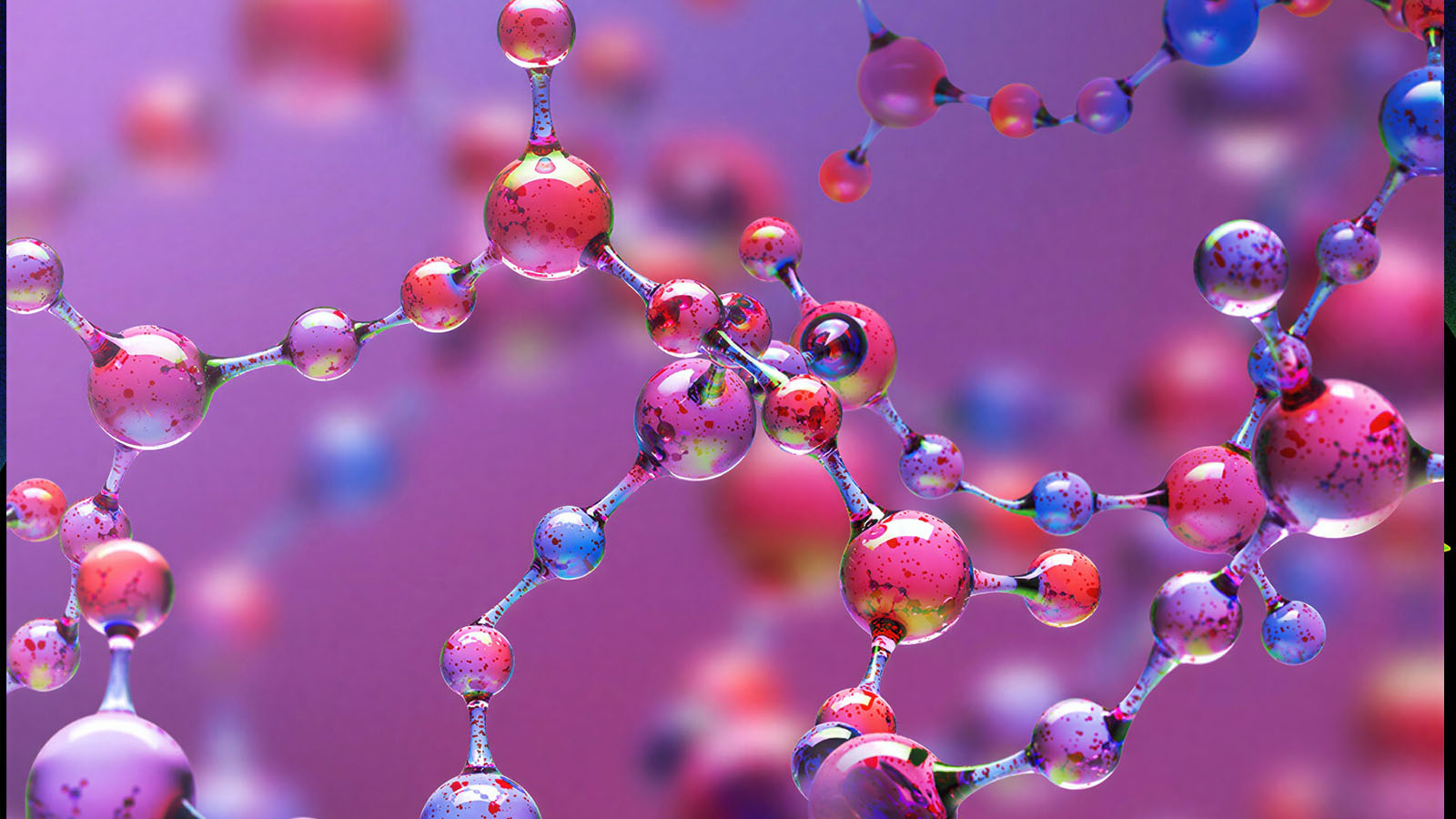
Precision Molecular Editing

Credits: Image: Adobe Stock
Researchers develop a molecular editing tool that precisely relocates alcohol groups, accelerating drug and materials discovery.

A longstanding challenge in chemistry is that even the smallest change to a molecule can dramatically alter its behavior. For researchers developing medicines, materials, and agricultural products, making those changes is rarely simple. Often, a tiny adjustment requires synthesizing an entirely new molecule from the beginning, adding significant time, cost, and complexity to the discovery process.

MIT chemists led by Professor Alison Wendlandt have developed a new molecular editing strategy that offers a more efficient path. Their technique allows an alcohol functional group, one of the most common features found in biologically active molecules, to be moved from one position to a neighboring site while preserving the molecule's overall structure. Using a light-activated catalyst called decatungstate, the researchers trigger a carefully controlled reaction that "relocates" the alcohol group without requiring the molecule to be rebuilt.

The advance gives scientists a powerful new way to fine-tune complex compounds at late stages of development. Instead of starting over each time they want to test a molecular variation, researchers can now make precise edits and rapidly explore new chemical possibilities. The approach could help accelerate the development of pharmaceuticals, advanced materials, and agrochemicals by making molecular optimization faster and more efficient.

MIT's research computing resources and analytical tools helped researchers investigate the reaction mechanism, evaluate selectivity, and understand the fundamental chemistry that makes these precise molecular edits possible.

Publication

Xu, Q., Nie, Y., Haaksma, J.-J., Zhang, R., Holmberg-Douglas, N., van der Mei, F., Scola, P. M., Williams, C., Johnson, J. A., and Wendlandt, A. E. (2026), Alcohol group migration by proximity-enhanced H atom abstraction, Nature, doi: 10.1038/s41586-026-10347-4
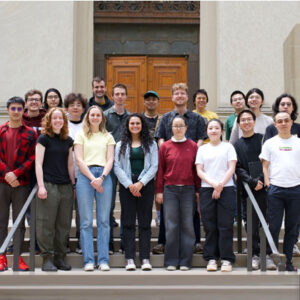
The Wendtland Lab, MIT
The Wendtlandt Lab, led by Alison Wendtland, develops catalytic methods to selectively rearrange molecular structures, enabling efficient synthesis of medicines and complex chemicals.

Principal Members

Yale

Featured Projects

A Cooler Quantum Future
SC25 Project
A Safer Way to See Inside Cells
Accelerating Materials Innovation with DFT, CALPHAD, and AI
Adaptive Deep Learning Systems Towards Edge Intelligence
SC25 Project
AI for Cancer Diagnosis
SC25 Project
AI Pareidolia
AI-powered Performance Analytics for HPC Systems
Asking Planetary Whatifs
SC25 Project
Better Pathogen Targeting
Research Computing Center
BU Research Computing Services
Building Bicontinuous Materials
SC25 Project
Building for Floods
Computation + Machine Intelligence | Wu Tsai Institute
SC25 Project
Computing Hidden Health Threats from Heat
Computing Ocean Carbon Removal
Computing the Geometry of Frustration
Dartmouth Chat
Developing Advanced Materials for a Sustainable Energy Future
From Murmurations to Music: Turning bird flight into climate stories
Generations of Discovery
Research Computing Center
Harvard FASRC
IceCube: Hunting Neutrinos
Imaging at Light Speed
Impact of Marine Heatwaves on Coral Diversity
Inside the Ocean's Response to Hurricanes
Learning Beyond Attention
Research Computing Center
Lincoln Laboratory Supercomputing Center (LLSC)
Mapping the Universe with AI and Supercomputing
Materials Remember
Materials That Give
SC25 Project MGHPCC Project
MGHPCC AI Computing Resource (AICR)
MGHPCC and Internet2
MGHPCC and Northern Crossroads
MGHPCC and the Campus Research Computing Consortium
MGHPCC and the IEEE High Performance Computing Conference
MGHPCC and the Massachusetts AI Hub
MGHPCC Project
MGHPCC and the National Data Platform
MGHPCC and the Northeast Research and Education Network
SC25 Project MGHPCC Project
MGHPCC and the Open Storage Network
MGHPCC Project
MGHPCC and the Prototype National Research Platform (PNRP)
MGHPCC Supercloud
SC25 Project
Microplastic-Free by Design
Research Computing Center
MIT Office of Research Computing and Data
Modeling an Atmospheric Detergent
SC25 Project
Multifunctional 3D-Printed Materials
SC25 Project
Naval and Ocean Renewable Energy Hydrodynamics
Research Computing Center
NEU Research Computing
SC25 Project
New Insights on Binary Black Holes
Northeast Storage Exchange
Precision Molecular Editing
Reading Night Light
SC25 Project
ReMIND
Revolutionizing Materials Design with Computational Modeling
Rhode Island INBRE Molecular Informatics Core (MIC)
SC25 Project
Sailing the Symbiosis Seascape
Seeing Ocean Currents with AI
SC25 Project
Shining a Light on Dark Matter
Simulating Large Biomolecular Assemblies
Smarter Protein Engineering
Software for Unreliable Quantum Computers
Solving a Physics Mystery with Supercomputing
SC25 Project
Staving off the Banana Apocalypse
Supercomputing the Arctic
SC25 Project
Supporting Data-intensive Social Science
The Kempner Institute - Unlocking Intelligence
The US ATLAS Northeast Tier 2 Center
Towards a Self-driving Lab?
Tracking Earth's Atmospheric Highways
Research Computing Center
UMass - URI Unity Cluster
Research Computing Center
UMass Amherst Research Computing and Data
Unlocking Non-coding DNA
Research Computing Center
URI Institute for AI & Computational Research
Virtual Materials Discovery at Scale
Watering MIT's AI Garden
SC25 Project
Wrangle Range Modeling
Yale Budget Lab
Yale Center for Genome Analysis (YCGA)
Research Computing Center
Yale Center for Research Computing
100 Bigelow Street, Holyoke, MA 01040