Welcome to the MGHPCC Virtual Booth

University of Massachusetts | University of Rhode Island

UMass Dartmouth

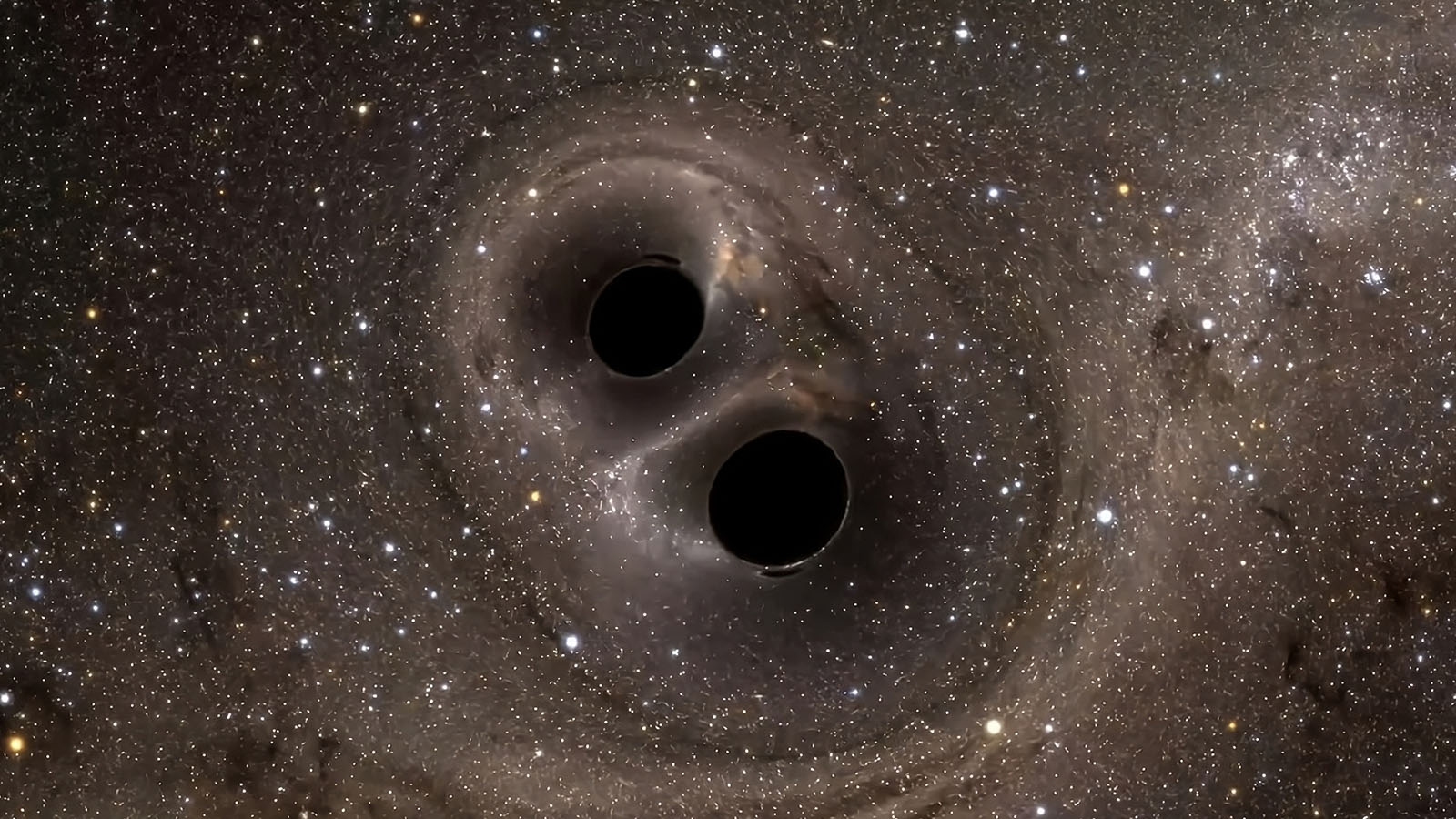
New Insights on Binary Black Holes

URI researchers make extensive use of the Unity Cluster housed at MGHPCC in their work relating to the coalescence of binary black hole systems using perturbation theory and estimation of the properties of the emitted gravitational radiation.

Using advanced computer simulations, Gaurav Khanna with postdoc Tousif Islam and others studied how two orbiting black holes merge, focusing on a key aspect of Einstein's theory of relativity: the "late-time tail" behavior in the gravitational waves they produce. The pair found that as the black holes' orbits become more elongated, these late-time signals become stronger. The way these signals decay over time follows a specific pattern we expected. In the course of their work, the researchers also created a free Python tool called "gwtails" to analyze this data and have shared some of their results so others can verify our findings.

A recent paper "Phenomenology and origin of late-time tails in eccentric binary black hole mergers" by Tousif Islam and co-authors investigates the gravitational wave signals emitted during eccentric binary black hole mergers, showing that late-time tails—slowly decaying waveforms—are significantly enhanced by orbital eccentricity and originate primarily when the smaller black hole passes near apocenter, rather than from strong-field effects near the larger black hole.
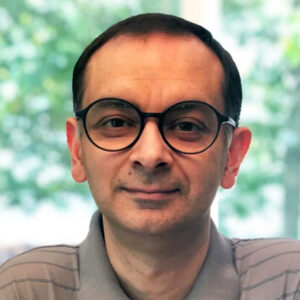
Gaurav Khanna
Professor in the Department of Physics and the Director of Research Computing at URI

Principal Members

Yale

Featured Projects

SC25 Project
A Safer Way to See Inside Cells
Adaptive Deep Learning Systems Towards Edge Intelligence
SC25 Project
AI for Cancer Diagnosis
SC25 Project
AI Pareidolia
SC25 Project
AI That Speaks Human About Health
Ancient DNA reveals pervasive directional selection across West Eurasia (working title)
Bayesian Deep Gaussian Processes for Correlated Functional Data (working title)
SC25 Project
Better Pathogen Targeting
Research Computing Center
BU Research Computing Services
SC25 Project
Building for Floods
Campus Research Computing Consortium
Cellular Protein Electrochemical Balance (working title)
Combining AI with laboratory evolution yields improved proteins (working title)
Computation + Machine Intelligence | Wu Tsai Institute
Computational Modeling of Biological Systems
Computer Simulations Show Strong Ocean Currents Reduce Size of Surface Waves (working title)
SC25 Project
Computing Hidden Health Threats from Heat
Contribution of Task-Irrelevant Stimuli to Drift of Neural Representations (working title)
Deciphering Alzheimer's Disease
Developing Advanced Materials for a Sustainable Energy Future
Earth & Planetary Sciences at Harvard University
Earth’s Nighttime Lights Are Getting More Volatile—What Does That Mean? (working title)
Enhancing a superconductor's potential (working title)
EventLFM: Event camera integrated fourier light field microscopy for ultrafast 3D imaging (working title)
MGHPCC Project
Expanding Computing Education Pathways (ECEP) Alliance
SC25 Project
FlowER: AI for Predicting Chemical Reactions
SC25 Project
Grid Responsive Data Centers
Research Computing Center
Harvard FASRC
IceCube: Hunting Neutrinos
Identifying non-coding variant effects at scale via machine learning models of cis-regulatory reporter assays (working title)
IEEE High Performance Extreme Computing Conference
Impact of Marine Heatwaves on Coral Diversity
Impulse response functions as a framework for quantifying ocean-based carbon dioxide removal (working title)
Is it time to expand our thinking about dark matter? A new study says yes (working title)
Research Computing Center
Lincoln Laboratory Supercomputing Center (LLSC)
SC25 Project MGHPCC Project
MGHPCC AI Computing Resource (AICR)
MGHPCC Supercloud
SC25 Project
Microplastic-Free by Design
Research Computing Center
MIT Office of Research Computing and Data
SC25 Project
Multifunctional 3D-Printed Materials
MGHPCC Project
National Data Platform
SC25 Project
Naval and Ocean Renewable Energy Hydrodynamics
Research Computing Center
NEU Research Computing
New MetaMaterials Take Inspiration from Deep Sea Sponges (working title)
MGHPCC Project
Northeast Storage Exchange
Novel study at URI seeks to treat neurological symptoms of rare genetic disorder (working title)
Open Cloud Testbed
SC25 Project MGHPCC Project
OSN - Open Storage Network
Planning, Reminders and Micro-Incentives to Walk After Traumatic Brain Injury: A Pilot Randomized Control Trial (working title)
MGHPCC Project
PNRP- protype national research platform
Protein Folding as a Jamming Transition (working title)
Researchers Discovering New Mosquito-Specific Viruses (working title)
Revolutionizing Materials Design with Computational Modeling
Rewind
SC25 Project
Sailing the Symbiosis Seascape
Shear-Induced Structural Convergence but Formation-History-Dependent Yielding in Sequentially Gelled Binary Colloidal Networks (working title)
SC25 Project
Shining a Light on Dark Matter
Simulating Large Biomolecular Assemblies
Single-molecule tracker illuminates workings of cancer-related proteins (working title)
Software for Unreliable Quantum Computers
SC25 Project
Staving off the Banana Apocalypse
SC25 Project
Supporting Data-intensive Social Science
The Kempner Institute - Unlocking Intelligence
The US ATLAS Northeast Tier 2 Center
This AI scientist can run an X-ray experiment. Self-driving labs may come next (working title)
SC25 Project
Tracking Environmental Health Risks
Research Computing Center
UMass - URI Unity Cluster
Research Computing Center
UMass Amherst Research Computing and Data
Unity HPC and AI Platform
Research Computing Center
URI Institute for AI & Computational Research
SC25 Project
Wrangle Range Modeling
Yale Budget Lab
Yale Center for Genome Analysis (YCGA)
Research Computing Center
Yale Center for Research Computing
Yale Department of Earth and Planetary Sciences
Zebrafish Reveal New Insights into Biology of Autism (working title)
100 Bigelow Street, Holyoke, MA 01040