Welcome to the MGHPCC Virtual Booth

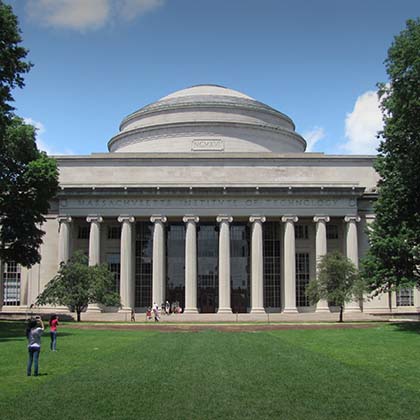
MIT

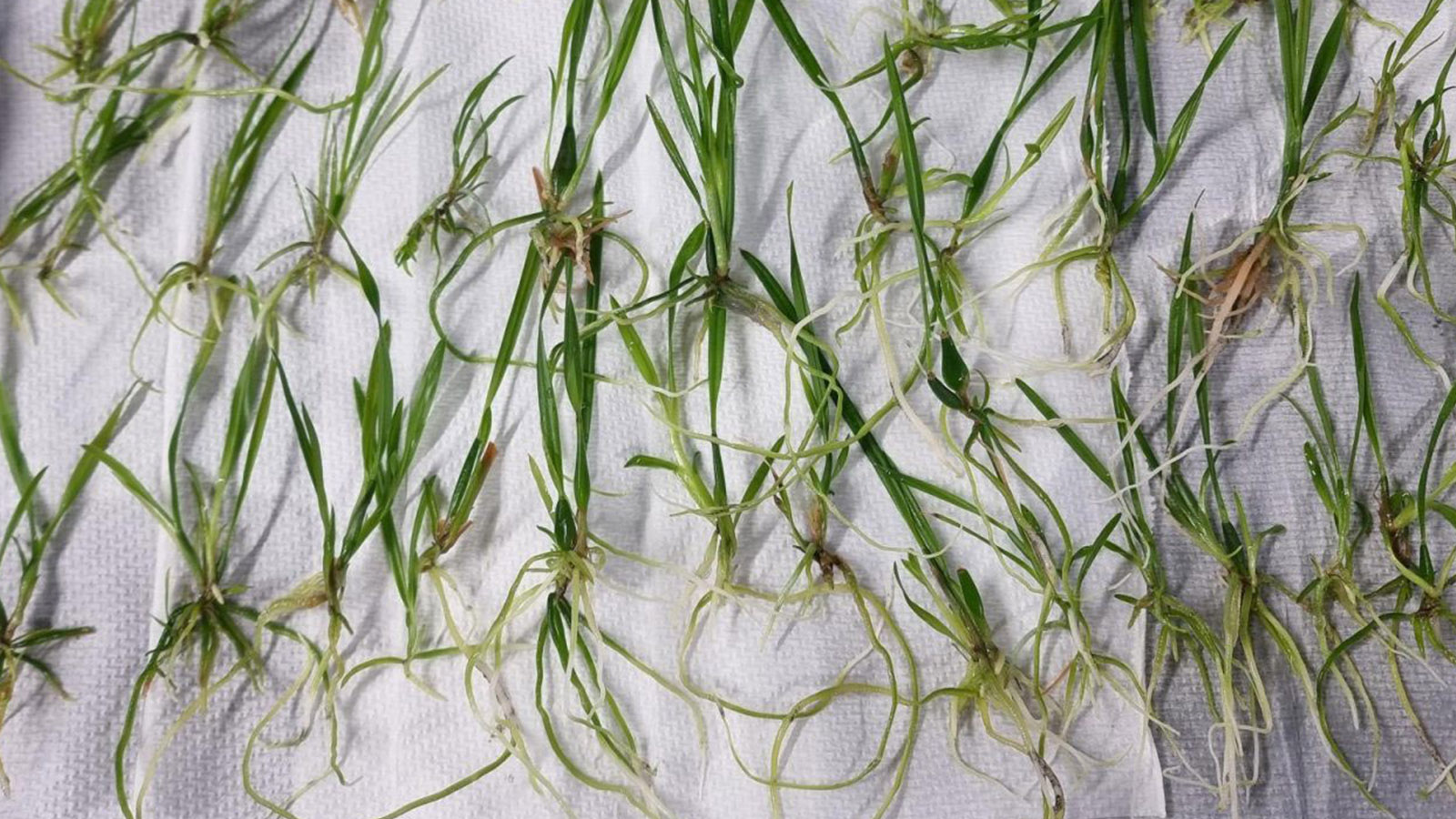
Watering MIT's AI Garden

MIT's Office of Research Computing and Data (ORCD) Seed Fund seeks to accelerate AI-driven research through shared GPU computing and expertise.

The rapid growth of artificial intelligence, simulation, and data-intensive science has created new opportunities across nearly every research field. At the same time, many promising projects require access to specialized GPU computing resources and expertise that may be difficult for individual research groups to obtain. MIT's Office of Research Computing and Data (ORCD) created its Seed Fund program is part of MIT's strategic effort to advance AI and machine learning research by providing researchers with access to GPU-accelerated computing resources and technical collaboration from ORCD staff. The program supports short-term, high-impact projects that both accelerate discovery and help evaluate and improve MIT's shared research computing environment.

The Fall 2026 ORCD Seed Fund portfolio spans materials science, astronomy, applied mathematics, fusion energy, biodiversity monitoring, biomedical imaging, neurology, and artificial intelligence.

  • Computational Prediction of Phase Diagrams for Metallic Alloys in Silico uses machine learning and GPU-accelerated simulations to predict alloy behavior across temperatures and compositions, accelerating materials discovery.
  • Developing a Public Package for Image Segmentation of Astronomical Datasets applies modern AI segmentation methods to protoplanetary disk imagery, helping astronomers more accurately interpret telescope observations.
  • Multi-scale Mixed-Precision Hardware-Agnostic Linear Algebra seeks to make advanced numerical computations portable across computing architectures while maintaining performance.
  • Machine-Learning Enabled Predictions of Fusion Power Plant Performance combines high-performance simulations and machine learning to improve predictions of future fusion reactor behavior.
  • Generative AI with Environmental Context Matching for Rare Insect Classification develops synthetic training data that reflects real-world ecological conditions, improving species-identification tools.
  • MultiverSeg3D aims to enable scalable segmentation of large biomedical imaging datasets using foundation-model approaches.
  • Multimodal Brain Foundation Model for Neurology combines EEG and fMRI data to advance neurological research and seizure forecasting.
  • Look but Don't Touch: Gradient Informed Selection Training develops more efficient AI training methods that can reduce computational cost while improving model performance.

Across all projects, MIT research computing provides the GPU infrastructure, software environment, and technical expertise that enable researchers to tackle computational problems at scales that would otherwise be impractical.

MIT Office of Research Computing and Data (ORCD)
MIT’s Office of Research Computing and Data (ORCD) provides advanced computing, data, and AI resources that enable research across science, engineering, and the humanities.

Principal Members

Yale

Featured Projects

A Cooler Quantum Future
SC25 Project
A Safer Way to See Inside Cells
Accelerating Materials Innovation with DFT, CALPHAD, and AI
Adaptive Deep Learning Systems Towards Edge Intelligence
SC25 Project
AI for Cancer Diagnosis
SC25 Project
AI Pareidolia
AI-powered Performance Analytics for HPC Systems
Asking Planetary Whatifs
SC25 Project
Better Pathogen Targeting
Research Computing Center
BU Research Computing Services
Building Bicontinuous Materials
SC25 Project
Building for Floods
Computation + Machine Intelligence | Wu Tsai Institute
SC25 Project
Computing Hidden Health Threats from Heat
Computing Ocean Carbon Removal
Computing the Geometry of Frustration
Dartmouth Chat
Developing Advanced Materials for a Sustainable Energy Future
From Murmurations to Music: Turning bird flight into climate stories
Generations of Discovery
Research Computing Center
Harvard FASRC
IceCube: Hunting Neutrinos
Imaging at Light Speed
Impact of Marine Heatwaves on Coral Diversity
Inside the Ocean's Response to Hurricanes
Learning Beyond Attention
Research Computing Center
Lincoln Laboratory Supercomputing Center (LLSC)
Mapping the Universe with AI and Supercomputing
Materials Remember
Materials That Give
SC25 Project MGHPCC Project
MGHPCC AI Computing Resource (AICR)
MGHPCC and Internet2
MGHPCC and Northern Crossroads
MGHPCC and the Campus Research Computing Consortium
MGHPCC and the IEEE High Performance Computing Conference
MGHPCC and the Massachusetts AI Hub
MGHPCC Project
MGHPCC and the National Data Platform
MGHPCC and the Northeast Research and Education Network
SC25 Project MGHPCC Project
MGHPCC and the Open Storage Network
MGHPCC Project
MGHPCC and the Prototype National Research Platform (PNRP)
MGHPCC Supercloud
SC25 Project
Microplastic-Free by Design
Research Computing Center
MIT Office of Research Computing and Data
Modeling an Atmospheric Detergent
SC25 Project
Multifunctional 3D-Printed Materials
SC25 Project
Naval and Ocean Renewable Energy Hydrodynamics
Research Computing Center
NEU Research Computing
SC25 Project
New Insights on Binary Black Holes
Northeast Storage Exchange
Precision Molecular Editing
Reading Night Light
SC25 Project
ReMIND
Revolutionizing Materials Design with Computational Modeling
Rhode Island INBRE Molecular Informatics Core (MIC)
SC25 Project
Sailing the Symbiosis Seascape
Seeing Ocean Currents with AI
SC25 Project
Shining a Light on Dark Matter
Simulating Large Biomolecular Assemblies
Smarter Protein Engineering
Software for Unreliable Quantum Computers
Solving a Physics Mystery with Supercomputing
SC25 Project
Staving off the Banana Apocalypse
Supercomputing the Arctic
SC25 Project
Supporting Data-intensive Social Science
The Kempner Institute - Unlocking Intelligence
The US ATLAS Northeast Tier 2 Center
Towards a Self-driving Lab?
Tracking Earth's Atmospheric Highways
Research Computing Center
UMass - URI Unity Cluster
Research Computing Center
UMass Amherst Research Computing and Data
Unlocking Non-coding DNA
Research Computing Center
URI Institute for AI & Computational Research
Virtual Materials Discovery at Scale
Watering MIT's AI Garden
SC25 Project
Wrangle Range Modeling
Yale Budget Lab
Yale Center for Genome Analysis (YCGA)
Research Computing Center
Yale Center for Research Computing
100 Bigelow Street, Holyoke, MA 01040